

Joel Thurtell: Short Stories Author
Joel Thurtell’s books reflect a lifetime of reporting, observation, and storytelling. As an author of short stories, he brings a distinctive voice and thoughtful perspective to a diverse collection of books. His titles range from journalism and newspaper satire to children’s fiction, memoir, and wooden boat restoration. Each book explores a unique subject while offering engaging stories shaped by decades of real-world experience. Whether you enjoy imaginative fiction, inspiring nonfiction, or stories drawn from personal experiences, Joel Thurtell’s books offer something for a variety of readers. Explore his collection and contact Joel Thurtell to learn more about his books and writing.
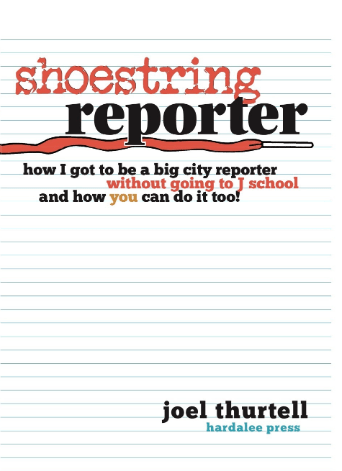
Shoestring Reporter How I Got To be A Big City Reporter Without Going to J School and How You Can Do It Too
The New Yorker runs a long story, “Out of Print,” explaining how American newspaper Journalism is going down the drain. The New York Times runs its own version of this mordant tale, “Paper Cuts,” arguing that the very medium that carries the article is in its death throes.
Who will save Journalism?
Not the people who are practicing it. Their primary challenge is the internet, which they so enthusiastically embraced without understanding or planning. Those people don’t have a clue how to handle the challenge of the internet.
But what if things aren’t as dire as the papers depict?
Or what if they are facing demise because they believe their own hype?
What if, by believing their own prophesies, they are killing themselves?
Who will save newspapers?
Not the people who own them.
Not the people who run them.
Those people are out to destroy the vessels of their employment.
When we think of newspapers in America, we tend to think of the dailies, the chain-owned papers from The Times on down to small-town dailies. But daily newspapers—chain-owned newspapers—are not the sum of Journalism. It’s just that they embody, in our collective mind, at least, much of what we think is good in Journalism: the watchdog role, comforting the afflicted and afflicting the comfortable. That is what Journalism should do, whether its parent is the newspaper or some other medium. And when we think of that kind of Journalism, we often think of papers like The Times, The Washington Post, or maybe the Los Angeles Times, Chicago Tribune, or The Philadelphia Inquirer.
Beacons of Journalism.
All are in deep trouble.
If newspapers must go, then Journalism at least is worth saving.
Who will save Journalism?
No lone person can do it. But many people, with the right mindset, could save Journalism, though the newspapers that have provided employment and a means of transmitting Journalism may disappear.
Journalism will be saved only if many people are inspired to practice the craft of reporting and writing about events, people, and social processes they find important. Many of these people are now excluded from the ranks of newspaper Journalists.
If Journalism can be saved, then maybe newspapers, too, can be revived.
There is a prejudice among orthodox, Journalism school-trained Journalists to look down on those who have not taken the same courses, pursued the same prestigious internships, and won the same coveted awards that produced the conventional practitioners themselves.
Such people—orthodox Journalists—will not save Journalism. The saviors of Journalism will come from outside the industry. They will work their way into the craft (NOT a profession!) and, eventually, take over and transform Journalism.
They will accomplish this feat from outside, at first. They will become paid part-time reporters—”stringers”—on the temporary payroll of newspapers.
How will they do this?
By reading this book, Shoestring Reporter, a manual outlining how people who are armed only with eyes, ears, and intelligence can, with forethought and discipline, become paid contributors to newspapers.
Shoestring Reporter is part autobiography, in that it explains how I became first a stringer, then a part-time newspaper editor, then a full-time staff reporter on a medium-sized paper. And finally, I was hired, with no formal academic Journalism training, as a full-time staff reporter at the Detroit Free Press, then the ninth-largest newspaper by circulation in the nation in 1984.
Shoestring Reporter explains how people who don’t have a college degree can be paid for reporting news. Why, I knew a stringer at the South Bend Tribune who had two licenses–as a hairdresser!
I believe people who are not tainted by the orthodox thinking of newsgathering institutions could—if enough of them became involved–save Journalism.
We need many people to write for newspapers from their own personal points of view. We need these people to bring independent, fresh approaches to reporting. We also need to make sure that they don’t become corrupted by standard Journalistic thinking.
We may come to see that the current precarious position of many American newspapers is the product of a long process of devaluing newspapers. This process was initiated long ago by the not-so-intelligent bosses who run newspapers. They have unintentionally shown what would happen when they milked newspapers for 20-plus percent returns; laid off valued writers, editors, printers, ad salespeople, photographers, and carriers.
They dumbed their papers down, reduced content, and provoked people to reject their watered-down product. And this is good. Not good for Journalism in the short term, but good for Journalism as well as the public in the long run, because the very people who have killed off the papers will themselves disappear with their corrupt publications, making room for new publishers, whose content and intellectual direction may well be determined by people who read this book and apply its principles.
This book is not aimed primarily at landing outsiders jobs at the big dailies. Though the chain-owned papers—of which The New York Times is only the best-known of many that are in deep trouble—are cutting jobs, they still hire stringers. But our focus should be on the smaller papers, the ones that are ignored when the big papers narcissistically focus on their own self-inflicted woes, ignoring those outliers in small communities: the papers that still print their news, don’t give it away free on the internet, and remain the only source for reports on the high school marching band and the doings of the town’s several churches.
To illustrate: I doubt the hotshot covering the demise of newspapers at The New York Times would think of calling Francie VanderMolen, operations manager at The (Berrien Springs) Journal Era in Southwestern Michigan. In summer 2009, I called Francie and said, “Does The Journal Era still hire stringers?”
“Yes,” Francie replied.
In 1980, I was editor of The Journal Era. I hired Francie, who had no Journalism training, to attend village council and school board meetings and write reports. I—or rather, The Journal Era—paid her ten bucks per meeting, but by sending the same reports to the South Bend Tribune, she was able to make an extra $25 per meeting—not bad, given the more robust purchasing power of the dollar in that time. Francie later became a full-time staff writer on The Tribune, but has returned to The Journal Era, where she started.
My big question, so many years after I started writing a primer for stringers, was simply, “Is it still possible, in these terrible times for newspapers, for someone to start a career in Journalism by working as a stringer?”
The answer from Francie is concise: Yes, absolutely. First of all—surprise, surprise—small community papers following the ancient business model of printing newspapers on paper with ads and news, then selling them to people who know they can read the ads and news only on paper, well, those newspapers by and large are doing okay. That’s not something you’ll read in the good old New York Times, but Francie’s take on the situation was confirmed by Debra Haight of Niles, Michigan. Debra is a 51-year-old Notre Dame University grad with an economics major who, some years ago, answered an ad to become a stringer for The (Benton Harbor) Herald-Palladium. She was hired by a Herald-Palladium reporter, Scott Aiken, and now makes a living by selling her reports to five newspapers.

Seydou's Christmas Tree
IT PROMISED TO BE A LONELY CHRISTMAS.
In this wonderfully inspirational book, journalist, novelist, and historian Joel Thurtell recalls how he and his wife learned the meaning of Christmas on the parched savanna of Togo, West Africa, thanks to a young Muslim.
The boy’s dad was the imam, who led prayers. His mom protected and advised the Americans. Their son, Seydou, was flunking out of the rigid, French-style Togolese elementary school, but in all matters that fell outside the classroom, Seydou was an expert.
Seydou shows us that whether we are Muslim or Christian, Buddhist, Hindu, animist, or atheist, our similarities outweigh our differences, and we are all connected.
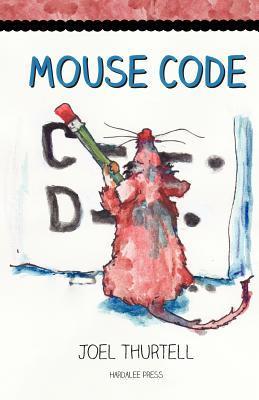
Mouse Code
How the field mice invented radio
Come with award-winning newspaper reporter, author, and ham radio operator Joel Thurtell as he spins the tale of how mice invented radio to save themselves and their friends, the moles, voles, shrews, groundhogs, badgers, and yes, even a blue racer, from death by development.
Humans are plowing up meadows and bulldozing trees so they can build houses, shopping centers, gas stations, and all kinds of human constructions that displace wildlife.
Enter Hannibal, the wise old field mouse who engineers a system to warn the animals of dangerous human activity.
Hannibal’s disciple, Arthur Mouse, is Hannibal’s loyal foot soldier. At great danger from hawks, snakes, owls, and a cat, the two mice steal materials from a ham radio operator so they can build their early warning radios.
Mouse Code entertains through its unique story and by offering young people Morse Code as a “secret” language for talking among themselves.
Says veteran ham operator George Petrides Sr., “One test of a story I have always liked is to read it out loud. Mouse Code scores a 10 in that category.” Petrides read Mouse Code to his 10-year-old granddaughter, Kaelyn, and reported that she “was instantly captivated by the characters, the plow, the letters V and B, the pompous words, the plight of the mice, and was able to follow the plot with no difficulty. She could define all of the more difficult words in her own words, so she learned vocabulary too. We’re already having fun communicating in simple Mouse Code.”
Veteran book illustrator John Barnhart created the pictures and cover for Mouse Code.
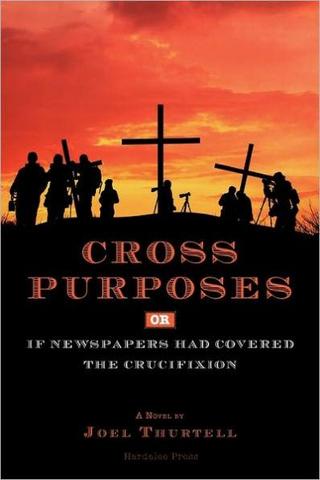
Cross Purposes, Or, If Newspapers Had Covered the Crucifixion
IT WAS THE GREATEST EVENT OF ALL TIME.
Religion writer Daley Strumm knew it. But did his editors? Would bosses at the Detroit Filibuster make sure their reporter was on hand at the crucial time, at the crucial place?
CALVARY
If he went, and saw, and wrote, would his paper print the story?
What would have happened…
If newspapers had covered the Crucifixion?
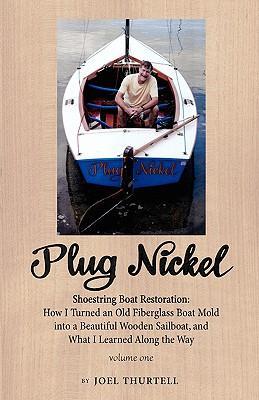
Plug Nickel Shoestring Boat Restoration; How I Turned an Old Fiberglass Boat Mold into a Beautiful Wooden Sailboat, and What I Learned Along the Way
It was not meant to be a boat, let alone sail. It was an industrial artifact, a mold known as a plug. Intended to shape future boat hulls, this plug morphed into a beautiful sailing craft. Here is the story of how an untrained boatbuilder turned a tool into a sailboat.

Up the Rouge!: Paddling Detroit's Hidden River (A Painted Turtle Book)
The Rouge River running through Detroit is too polluted for recreation, yet Detroit Free Press reporter Joel Thurtell and photographer Patricia Beck decided to canoe the Rouge—most of which is too shallow or log-jammed for a motorboat—to explore not only the river’s industrial side but also its beautiful and hidden urban wilderness. Plus, they wanted badly to show that the river, despite dams and dozens of logjams, is a navigable waterway. Up the Rouge! is the surprising and educational account of their journey. Thurtell’s suspenseful narrative blends with Beck’s evocative photographs to render a unique tale of urban adventure.
Thurtell and Beck logged more than sixty hours during the first week of June 2005 as they paddled their canoe up more than twenty-seven miles of the Rouge from Zug Island at the Detroit River to Nine Mile and Beech roads in the suburb of Southfield. The Rouge is heavily polluted by sewage and industrial waste, and large sections of the 127-mile-long river have been purposely made inaccessible to the public. Government agencies have spent $1.6 billion trying to clean it up. Thurtell and Beck show that despite its environmental contamination, the Rouge is home to wildlife and that its very seclusion makes it a sanctuary. During their trek, the authors saw green and blue herons, snapping turtles, musk turtles, mallards, feral dogs, and the first adult female common mergansers ever recorded in summertime Wayne County. Maps are included to help readers track their journey.
Up the Rouge! is a story about discovery, a tale of adventure, and an informative study of the environment. The series of articles in the Detroit Free Press, on which this volume is based, won the 2006 Harry E. Schlenz Medal for Achievement in Public Education from the Water Environment Federation. Anyone interested in environmental issues or conservation of Michigan’s waterways will appreciate this unique and attractive volume.

The Woof Was at the Door
Coming Soon
The Croc Who Came in from the Cold
Coming Soon